
Summary
Smaller, just as strong, licence-free
A medtech manufacturer wants to take a blood pump on a catheter into series production. The prototype measures 6 mm and runs on SmCo magnets, which need an export licence from China. The series design measures 4 mm and uses NdFeB without heavy rare earths: it transmits 1.12 mNm, 91 % of the prototype, and the signal at the Hall sensor deviates by only 3.8 %. BOMATEC overmolds the outer magnet into the impeller, qualifies the process and secures a supply without an export licence.
- 6 → 4 mm outer diameter, one third smaller
- 1.12 mNm pull-out torque, 91 % of the prototype
- 0 licences: NdFeB without heavy rare earths instead of SmCo
Representative case, combined from two BOMATEC projects and presented at MEDICA TECH FORUM 2026. Dimensions and figures come from a magnetic field simulation with assumed geometry, not from customer data. The measured value for the model check is assumed as well.
Starting point
A pump on a catheter
- Device: Intravascular blood pump on a catheter, for interventional cardiology
- Status: Working prototype with a 6 mm outer diameter
- Magnet: SmCo (Sm2Co17), chosen to be on the safe side during overmolding. Sourcing it from China requires an export licence.
- Why us: From prototype to series: help with licences and supply, and the part has to get smaller
The coupling transmits the torque from the motor in its sealed titanium housing to the impeller in the blood. No shaft passes through the wall, so there is no shaft seal in the blood path. A Hall sensor in the motor flange, 3 mm in front of the magnet, reads speed and blockage from the rotating field. If its signal stays the same, the evaluation and validation of the electronics stay unchanged. That is why the field at the sensor counts as much as the torque.
The requirements for series production:

Outer diameter: 6 → ≤ 4 mm
The pump has to become one third slimmer for series production.

Performance: the same
Pull-out torque within ±20 % of the prototype, field at the Hall sensor within ±5 %.

Export licence: not required
NdFeB without heavy rare earths (dysprosium, terbium, gadolinium, holmium).

Overmoldable: yes
The magnet withstands the process heat.
Why it is difficult
One change leads to the next
Smaller, just as strong and licence-free: each of these requirements makes the others harder. That is why they have to be solved together.
- −56 % magnet cross-section if every dimension shrinks with the diameter from 6 to 4 mm. It takes more remanence than SmCo delivers: hence NdFeB.
- −10 % flux density that a magnetized NdFeB magnet loses during overmolding. Its coercivity drops two to three times as fast with temperature as that of SmCo.
- +Dy/Tb: The usual remedy restores the coercivity and brings the export licence back.
The path
Five decisions, from the model to the supply
From the validated magnetic model to overmolding at our own plant and a secured supply. We show each step in detail below.
01 · Engineering: Model what is already there
Rebuild the 6 mm prototype as a magnetic model and check it against the real part: 37.4 mT simulated, 38.6 mT measured (assumed value).
02 · Engineering: Iterate against both targets
156 candidates, two targets at once. Result: BMN-52SH with 1.12 mNm and −3.8 % at the sensor.
03 · Own production: Overmold into the impeller
Magnet, flushing sleeve and impeller joined and sealed in the same shot, at the BOMATEC plant in Malaysia.
04 · Quality: Qualify the process
IQ, OQ and PQ run again, documentation up to the FMEA, every batch tested.

05 · Logistics: Secure the supply
Production outside China, consignment stock at the customer, safety stock in Switzerland.
01 · Engineering
Model what is already there
Before we change anything, we rebuild the 6 mm prototype as a magnetic model: magnets, titanium wall, impeller hub and Hall sensor. The model gives a pull-out torque of 1.23 mNm and 37.4 mT at the sensor. Then we check it against a measurement on the real part; in this representative case the measured value is assumed.
The flushing sleeve sits in the field. That is why we specify it as non-magnetic: 316L instead of a magnetic steel, because its walls are too thin for PEEK. We check its influence with FEM.
Model check: 37.4 mT simulated, 38.6 mT measured (assumed value). Deviation −3.0 %.
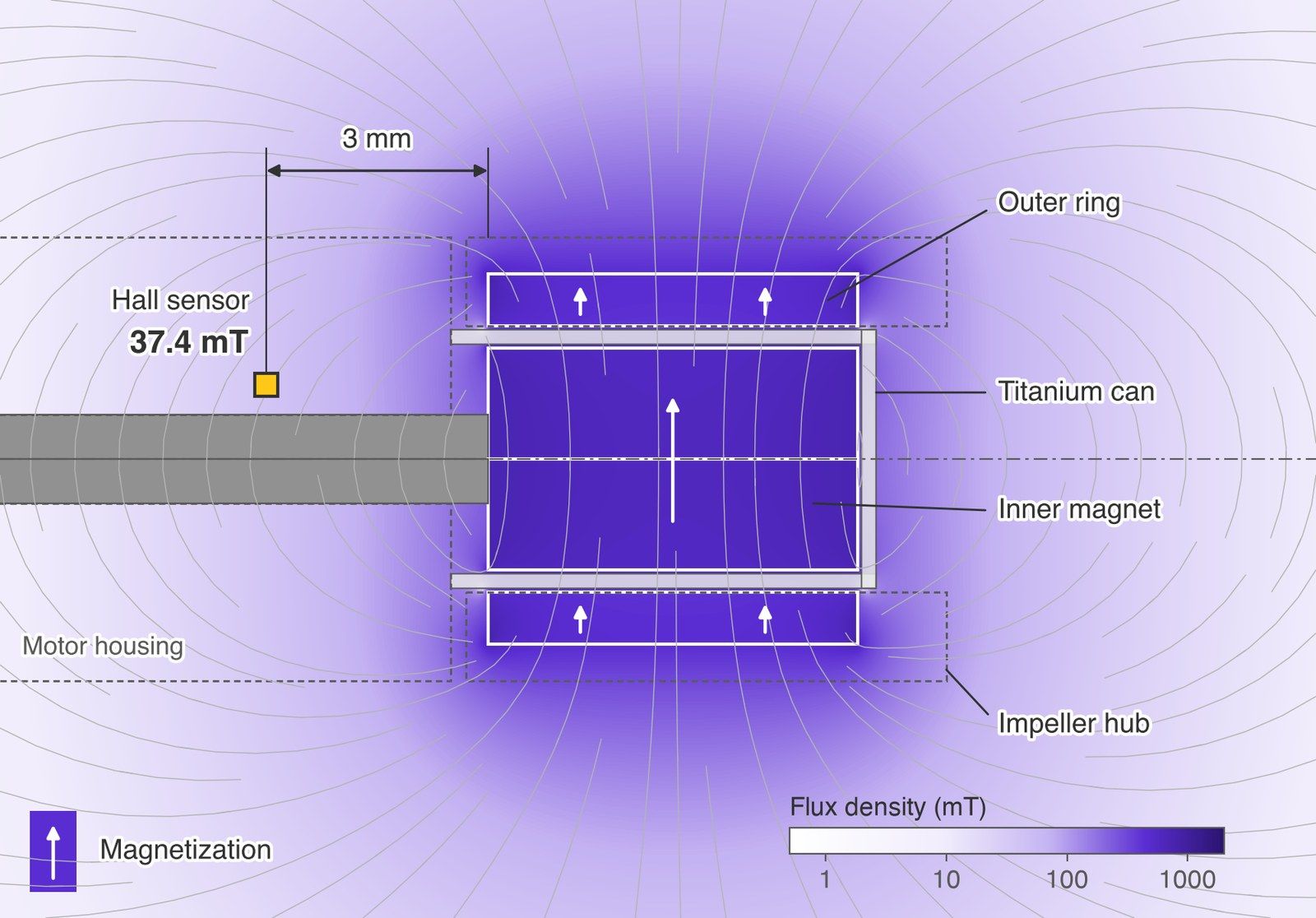
Fig. 1 – Longitudinal section through the prototype (SmCo BMSG-22), flux density on a log scale in mT. The Hall sensor in the motor flange, 3 mm in front of the magnet, sees 37.4 mT.
02 · Engineering
Iterate against both targets
We vary the inner magnet, ring thickness, length, grade, number of poles and segments. Two targets apply at the same time: pull-out torque 0.98 to 1.47 mNm and field at the sensor within ±5 %.
Simply scaled down, 0.33 mNm remain. Four segments or four poles add torque, but cost 41 % or 91 % of the sensor signal. Both targets come back mainly through a thicker outer ring: only the 316L flushing sleeve, 0.15 mm thin, covers it (prototype: 0.5 mm wall). On top of that come 7.5 instead of 5 mm length for the sensor signal and BMN-52SH, the strongest grade free of heavy rare earths.
Result: 1.12 mNm and −3.8 % at the sensor, the best of 156 candidates.
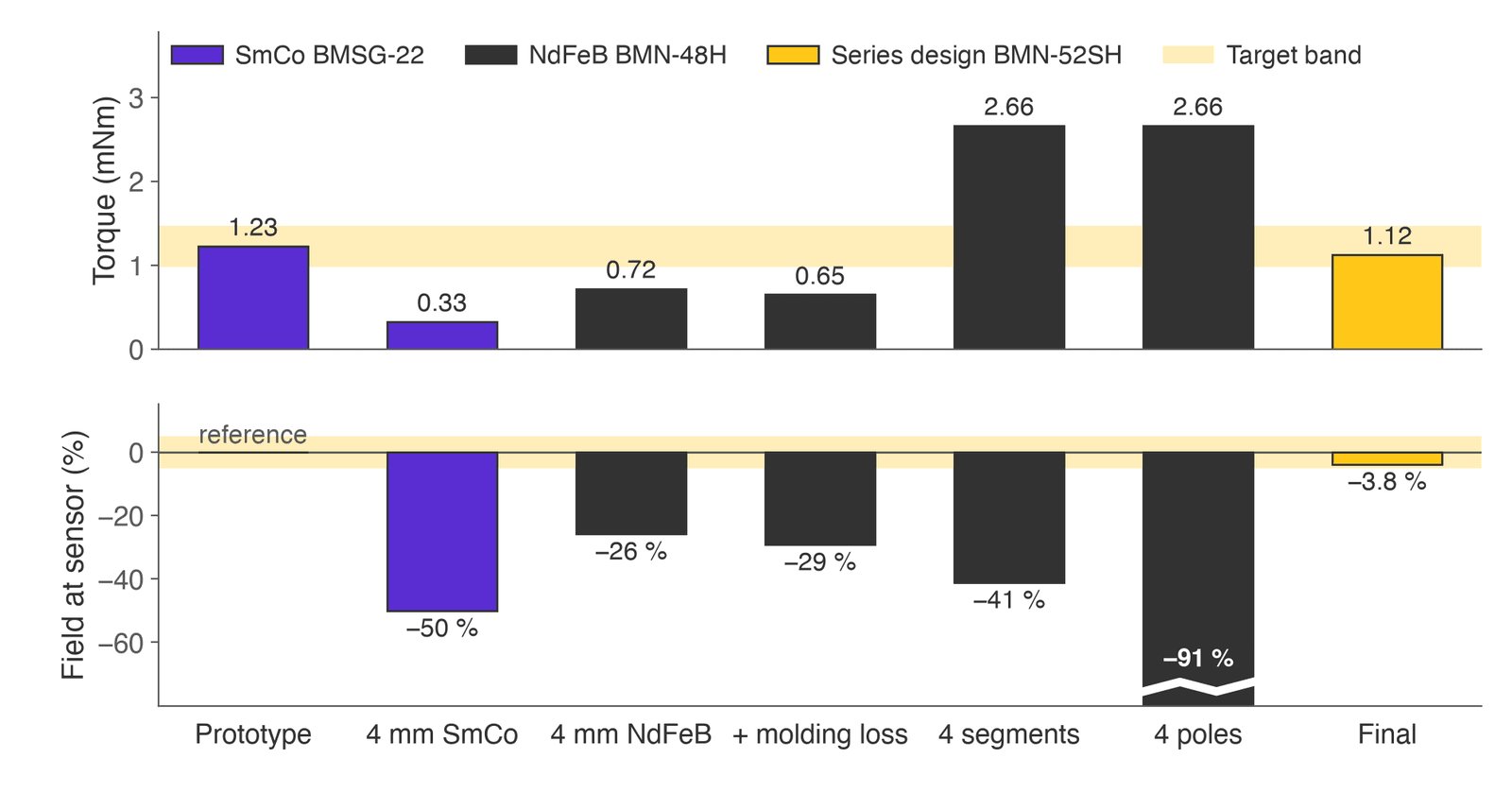
Fig. 2 – Seven calculation steps from prototype to series design: pull-out torque in mNm at the top, deviation of the sensor field in % at the bottom, target bands in yellow.
03 · Own production
Overmold into the impeller
We overmold the outer magnet directly into the impeller, at our plant in Malaysia. Magnet, flushing sleeve and impeller are joined and sealed in the same shot: no adhesive, no separate seal in the blood path. The 316L flushing sleeve forms the outer wall over the Parylene-coated magnet, the plastic closes the end faces.
The flushing sleeve goes into the mold as an insert; its channels are laser-cut after overmolding. Grade and volume make up for the flux loss of about 10 % from overmolding.
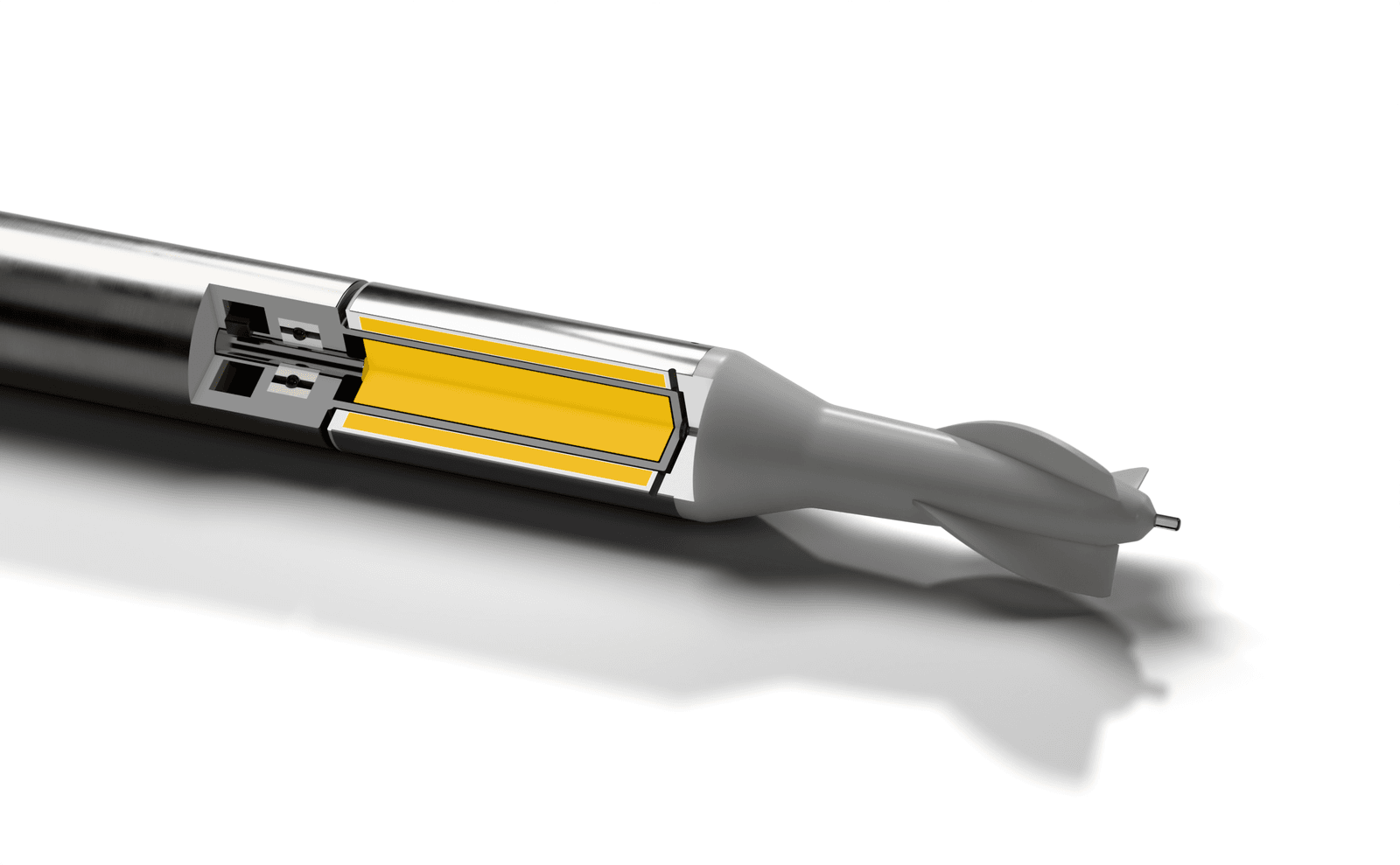
Fig. 3 – Series design in quarter section (schematic): NdFeB outer ring under the 316L flushing sleeve, inner magnet in the titanium can, impeller on the right.
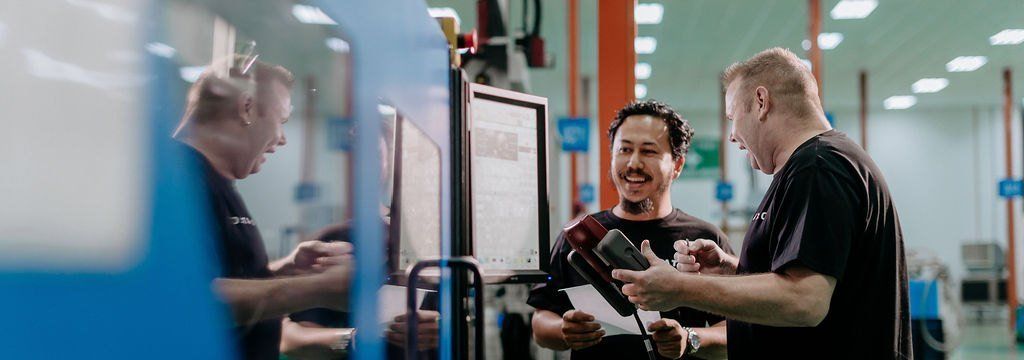
Injection molding at the BOMATEC plant in Malaysia
04 · Quality
Qualify the process
New magnet material, new process: IQ, OQ and PQ run again. We document our process step, as a full PPAP on request, and support you up to the FMEA.
- Every batch tested: magnetic properties, dimensions, coating (salt spray test 96 h)
- Sampling to your specification, often 100 %: your incoming inspection can be dropped
- Traceable to the raw material batch, on-site audits welcome
- IATF 16949 with the same test equipment in Switzerland, Malaysia and China
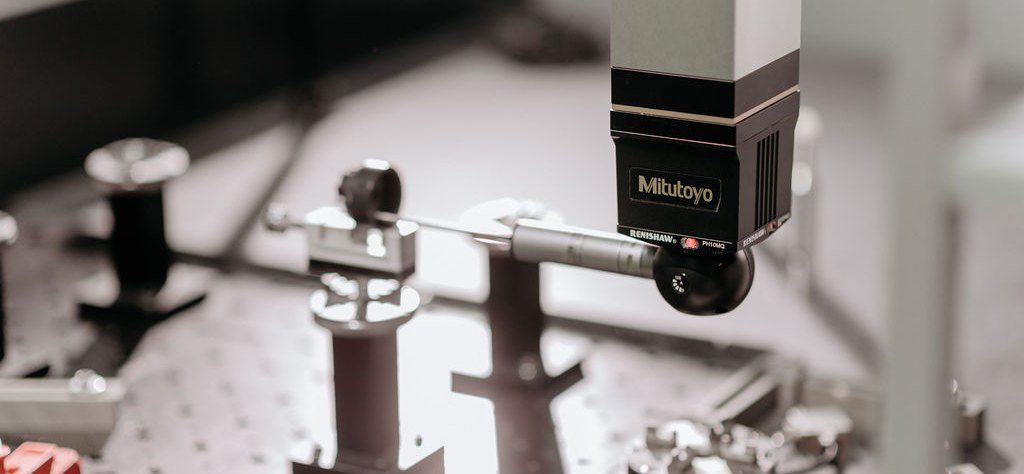
Coordinate measuring machine in the BOMATEC lab in Malaysia
05 · Logistics
Secure the supply
Our plant in Malaysia injection molds, overmolds, presses and assembles, outside China. Sintered NdFeB magnets without heavy rare earths need no export licence; on request we source them from partners outside China.
- Consignment stock at the customer: eases their cash flow
- Safety stock in Switzerland, sized to demand, for up to two years
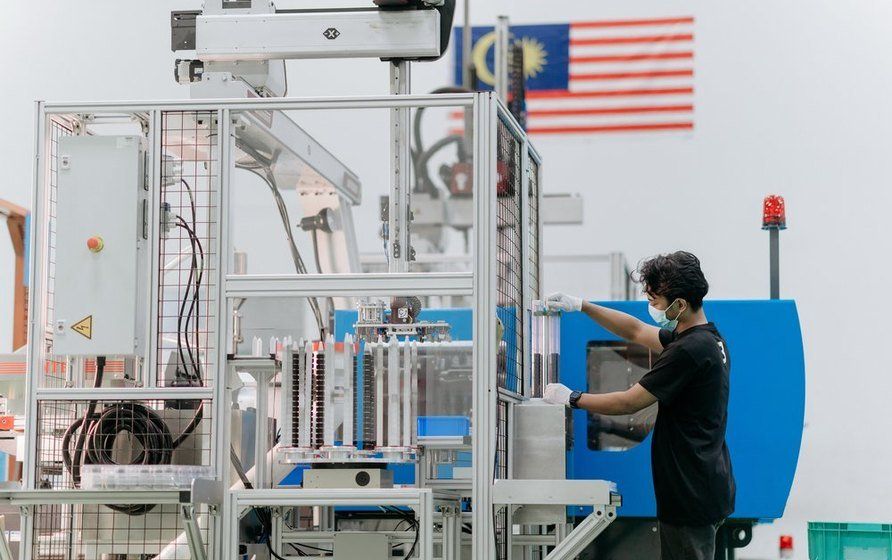
Automated production cell at the BOMATEC plant in Malaysia
Result
Where the case lands
Same performance at two thirds of the diameter and without an export licence. The price is length: 7.5 instead of 5 mm, which the catheter can accommodate.
Prototype → series
- Diameter: 6 → 4 mm
- Pull-out torque: 1.23 → 1.12 mNm
- Field at the Hall sensor: 37.4 → 36.0 mT (−3.8 %)
- Magnet length: 5 → 7.5 mm
- Material: SmCo BMSG-22 → NdFeB BMN-52SH
- Incoming inspection: required → dropped
- Supply: SmCo from China with licence → NdFeB without licence, overmolded in Malaysia, stock in Switzerland
1.12 mNm
Pull-out torque, within the ±20 % band
−3.8 %
Field at the Hall sensor, target ±5 %
7.5 mm
Magnet length, instead of 5 mm
BMN-52SH
NdFeB without heavy rare earths: no export licence
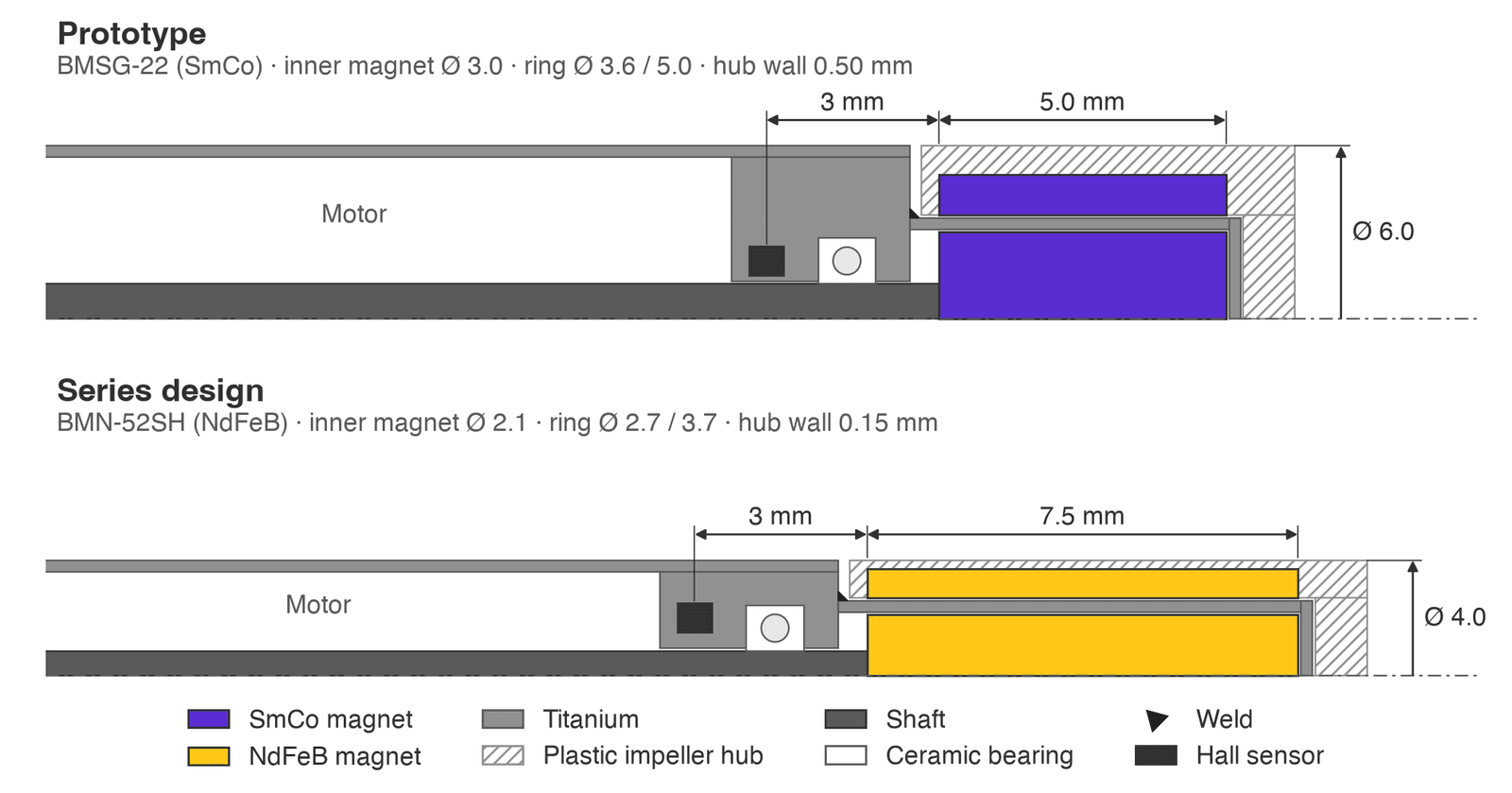
Fig. 4 – Prototype (top) and series design (bottom) at the same scale.
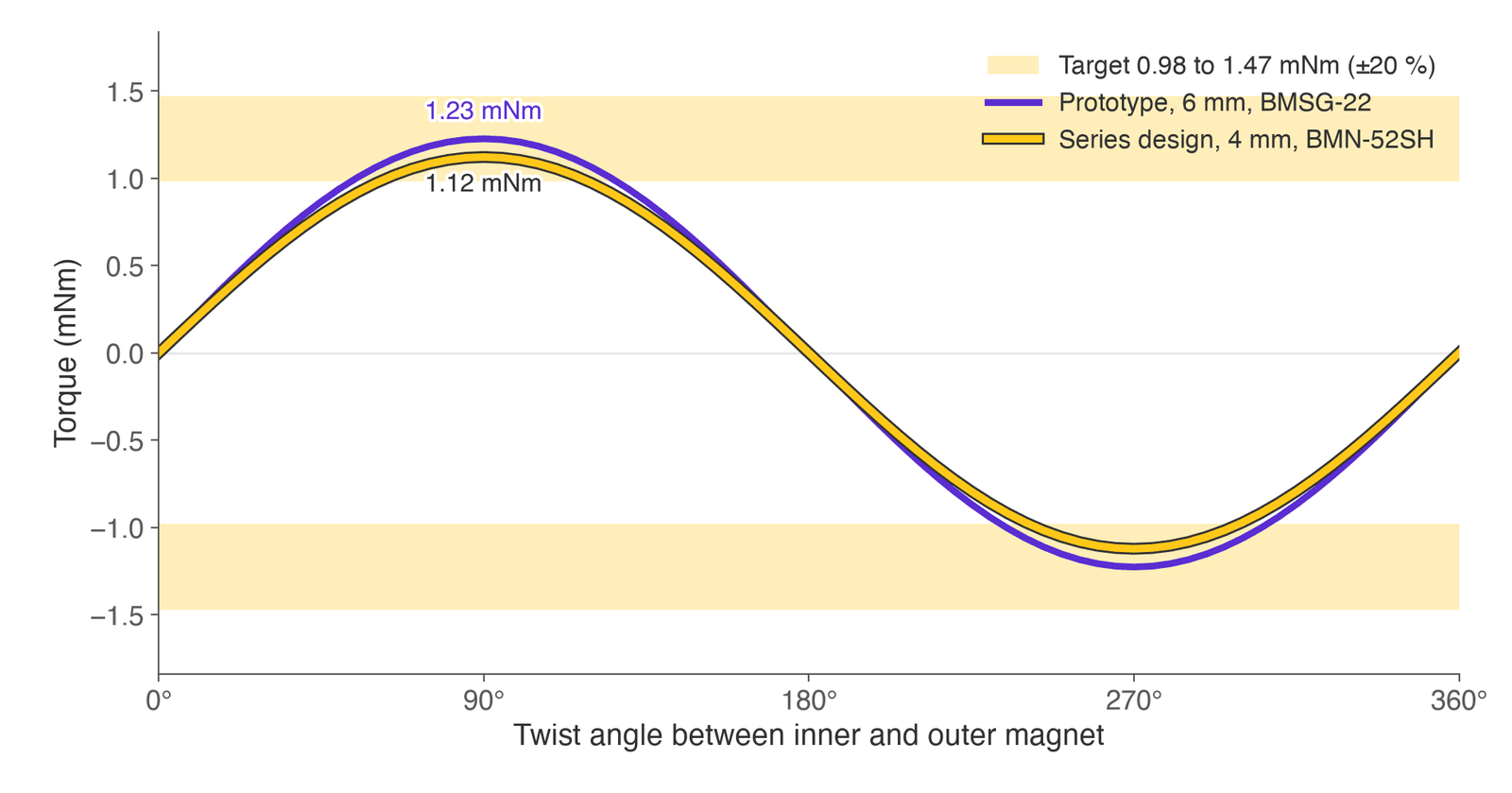
Fig. 5 – Torque over twist angle. The pull-out torque is the maximum at 90°.
Context
Assumptions and limits of the calculation
- Representative geometry, no customer dimensions. Titanium wall 0.2 mm, gaps 0.05 mm each, flushing sleeve over the ring 0.15 mm.
- Magnetostatic, without speed, temperature and eddy currents. Nominal remanence at 20 °C.
- Both magnets 2-pole, one-piece, diametrically magnetized. Overmolding loss 10 % on the NdFeB ring.
- Flushing sleeve and shaft non-magnetic and therefore not modelled, a ceramic bearing between magnet and sensor.
- Targets apply against the simulated prototype. The measured value at the sensor is assumed and serves only for the model check.
- China's export rules: as of November 2026.
Our engineers check the flushing sleeve with its channels and the eddy currents in the titanium wall with FEM before the process is qualified.
What you can take away
Four lessons from the project
- Treat the magnet as a design variable from the first sketch.
- Validate the simulation on the prototype before you optimize.
- Plan qualification and supply in the concept phase, not just before SOP.
- Talk to us early. Then we design the magnet around your other requirements.
FAQ
Questions about the case study
Why not simply stay with SmCo?
Samarium has been on China's control list since April 2025, so SmCo from China needs an export licence. The authority has up to 45 working days to decide, it often takes longer, and the rules change with politics. We have no source for SmCo outside China.
Why not NdFeB with dysprosium or terbium?
These heavy rare earths make NdFeB more temperature-resistant, but are themselves subject to China's export controls. We would have swapped one licence for the next.
Why does the coupling get longer?
At 4 mm, magnet volume is missing. A thicker ring brings most of it back, possible because only the 0.15 mm thin flushing sleeve covers it. The sensor signal also needs length: 7.5 instead of 5 mm. More than 1.5 times the prototype length was not allowed.
Why not magnetize after overmolding?
Because the outer ring is too small for that at 4 mm. It is magnetized beforehand and loses about 10 %; grade and volume make up for it.
Can this be transferred to other products?
The approach, yes. Whether a licence-free material is enough, we check for each magnet individually.
Discuss your project
Bring your case
A coupling, a sensor magnet, an actuator: wherever the magnet turned out to be harder than expected. Patrick Muschak, Sales Engineer Medical & Life Sciences, looks forward to hearing from you.

Your contact for medical technology
Patrick Muschak
Sales Engineer Medical & Life Sciences

Talk to an expert!
Philippe Scheuber
Head of Sales
Magnetic Future Technologies
Innovative solutions for enhanced efficiency
With three decades of expertise and close collaboration with esteemed partners in industry and academia, we've been able to pioneer innovative products and patented processes in the field of magnet technology. Our focus is on delivering peak product performance while keeping costs to a minimum.