


Innovations that propel you forward
How do innovations emerge at BOMATEC?
Curiosity is certainly a hallmark of our approach. What else contributes? Our proven expertise in engineering and market knowledge, blending theory with practice, makes all the difference. Our eagerness to enthusiastically embrace and solve our clients’ technical challenges sets us apart. Collaborating with universities and research institutions, we achieve innovations that propel our customers forward.
Sustainability
Challenge accepted
We place sustainability at the heart of our operations. Magnets play a pivotal role in the development of climate-neutral technologies like wind power and electric mobility. We carefully consider the use of rare-earth elements and are constantly optimizing our magnets for peak performance.
Transforming problems into innovations
How BOMATEC turns ideas into reality
Sometimes things just don’t go as planned, or there’s room for improvement. Let’s talk about it! With our engineering expertise, market knowledge, and partnerships with universities, we discover new solutions – ones that neither our clients nor we had previously imagined.
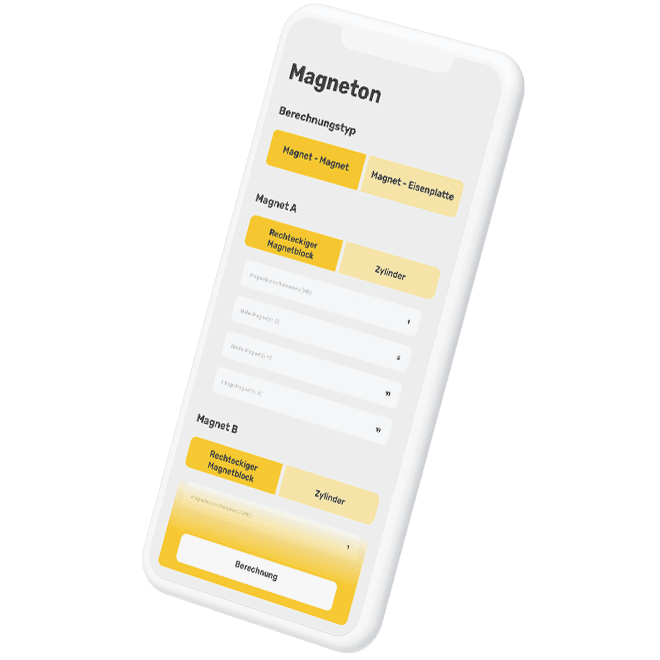
Calculate magnetic force yourself
MAGNETON - The new force calculation tool from BOMATEC
BOMATEC has developed the unique MAGNETON - a tool for calculating the magnetic force of magnets according to your specifications. Enter a few specific parameters. The MAGNETON quickly provides a meaningful simulation of the magnetic field patterns and force components. Which magnet is suitable for your application? Try it out!
Innovations through collaboration
Realizing shared visions
Cutting-edge scientific approaches often emerge from research in universities and higher education institutions. That’s why BOMATEC collaborates closely with the University of Flensburg, focusing on renewable energies and sustainable development. This partnership provides us with continuous opportunities for development and an environment to advance research in this field.
Fueled by this partnership, BOMATEC consistently achieves groundbreaking innovations. For instance, SNAKELINE: a streamlined production technology that eliminates the need for magnet laminating, thus making production more cost-efficient. Or the development of bespoke software: a refined calculation tool for eddy current losses that operates much faster than standard market tools. These are tangible, significant advancements that deliver real value to both our operations and our customers.
Success through collaboration
Our partners



Further questions? Talk to an expert!
Philippe Scheuber
Head of Sales
Frequently Asked Questions
How do innovations emerge at BOMATEC?
At BOMATEC, innovation arises from the combination of technical expertise, market knowledge and curiosity. Through close collaboration with customers, universities and research institutions, theory and practice are brought together to develop new magnetic technologies, production processes and engineering solutions.
How does BOMATEC approach its customers' technical challenges?
BOMATEC treats technical challenges as the starting point for innovation. Requirements, performance limitations and opportunities for improvement are analysed together with the customer. Engineering expertise, simulation tools, prototyping capabilities and research partnerships are then combined to develop a technically and economically suitable solution.
For a direct enquiry, Christoph Bolliger can be contacted through the contact form.
What is SNAKELINE magnet segmentation technology?
SNAKELINE is a magnet-segmentation process developed by BOMATEC. Instead of manufacturing and gluing several separate magnet segments, a single magnet is segmented using wire electrical discharge machining. The cut follows a programmable pattern adapted to the application.
This approach reduces eddy current losses while improving handling and material utilisation compared with conventional glued magnet segments.
Why are magnets segmented in electric motors?
Magnets are segmented to reduce eddy current losses. In electric motors, these currents can generate heat, reduce effective remanence and lower overall efficiency. Segmentation interrupts the current paths inside the magnet and can therefore reduce heat generation and improve motor performance.
Because segmentation adds manufacturing complexity, BOMATEC recommends evaluating the technical benefit and additional cost for each application.
Can BOMATEC calculate eddy current losses in magnets?
Yes. BOMATEC uses in-house analytical software to provide a fast initial estimate of eddy current losses. Finite element analysis tools can then be used to simulate and compare different magnet designs and segmentation concepts in greater detail.
For complete motor-level loss analysis, the evaluation can be extended together with BOMATEC's sister company Steeem.
What engineering and simulation services does BOMATEC offer?
BOMATEC provides magnetic design and optimisation using finite element analysis tools such as Opera and ANSYS, analytical magnetic-modelling tools and dedicated CAD systems. Its prototyping facility in Switzerland supports rapid iteration and validation before production is transferred to the manufacturing facilities.
For complete electric motor development, additional engineering support is available through the sister company Steeem.
Which research institutions does BOMATEC collaborate with?
BOMATEC collaborates with the University of Flensburg in areas including renewable energy and sustainable development. The partnership brings academic research and industrial application together and has contributed to developments such as SNAKELINE and dedicated software for calculating eddy current losses.
What are common mistakes in magnet design?
A common mistake is specifying more coercivity than the application actually requires. This can lead to unnecessary use of heavy rare earths and additional supply-chain or export complications.
Eddy current losses and the possible need for magnet segmentation are also frequently overlooked. Addressing these factors early in the design process can improve efficiency, simplify production and reduce avoidable costs.