
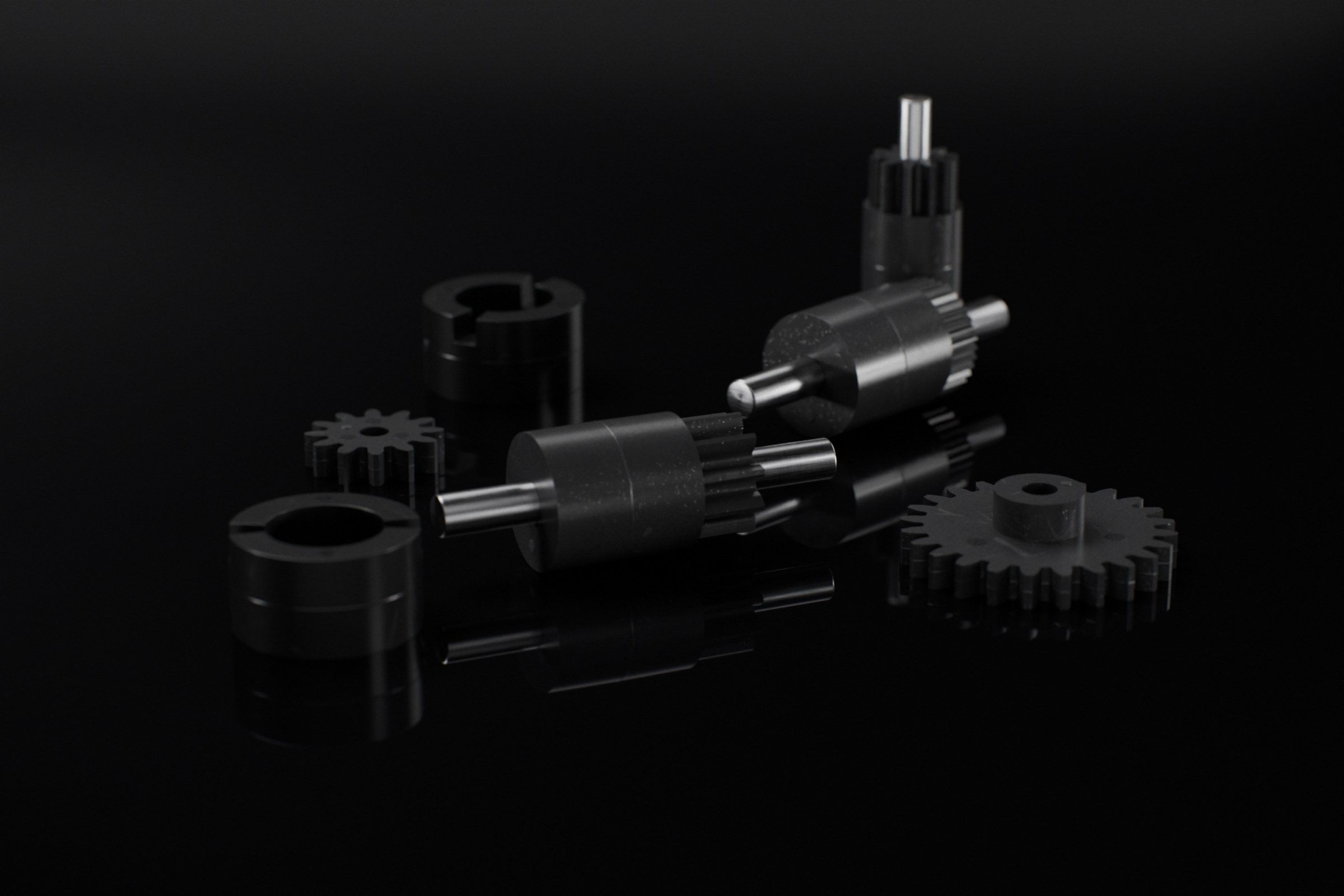
Rotors with overmolded magnet and integrally molded pinion, next to them injection-molded rings and gears made of plastic-bonded magnet material.
Why assemblies
What changes for your project
A magnet is rarely installed the way it comes out of the sintering furnace. It is encapsulated, joined, aligned and tested, and in a medical device each of these steps needs a qualified supplier and a controlled process. If we deliver the assembly, these steps are in our hands.


Fewer suppliers to qualify
Magnet, coating, plastic part and joining come from a single source. You assess and monitor one supplier and manage one part number.

A validated joining process
Whether a magnet is correctly overmolded or bonded cannot be fully verified on the finished part. We validate these processes to IQ/OQ/PQ and provide you with the records for your documentation.

Shorter tolerance chain
The position of the magnet relative to the shaft, gear or housing is set in one step and measured on the assembly. The adhesive gap and the play of a second assembly step are eliminated.

No handling of strong magnets
Magnetized NdFeB magnets are brittle, attract each other and collect particles. You receive a finished part. We magnetize larger assemblies only after overmolding.
Scope of supply
Which assemblies we deliver
The examples show typical designs. We define geometry, materials and joining method together with your engineering team.

Overmolded rotors
Plastic-bonded magnet on a stainless steel shaft, with the pinion molded on directly. You receive the finished rotor for a small motor, pump or gearbox.
Insert-molded sensor magnets
A nickel-plated NdFeB magnet sits in the hub of a POM gear. The sensor detects the position directly at the gear, so no separate magnet holder is needed.
Multipole rings with molded features
Injection-molded rings made of plastic-bonded magnet material. Notches, cams or snap-fit lugs are formed in the same mold and serve for alignment during magnetizing and installation.
Encapsulated micro-assemblies
Four nickel-plated NdFeB segments joined in a stainless steel sleeve, for instruments and catheters with only a few millimetres of installation space. The example shown is about Ø 4 mm. More on this under micromagnets.
Magnetic couplings
We also deliver magnetic couplings as assemblies, with the outer magnet directly in the impeller. Go to magnetic couplings
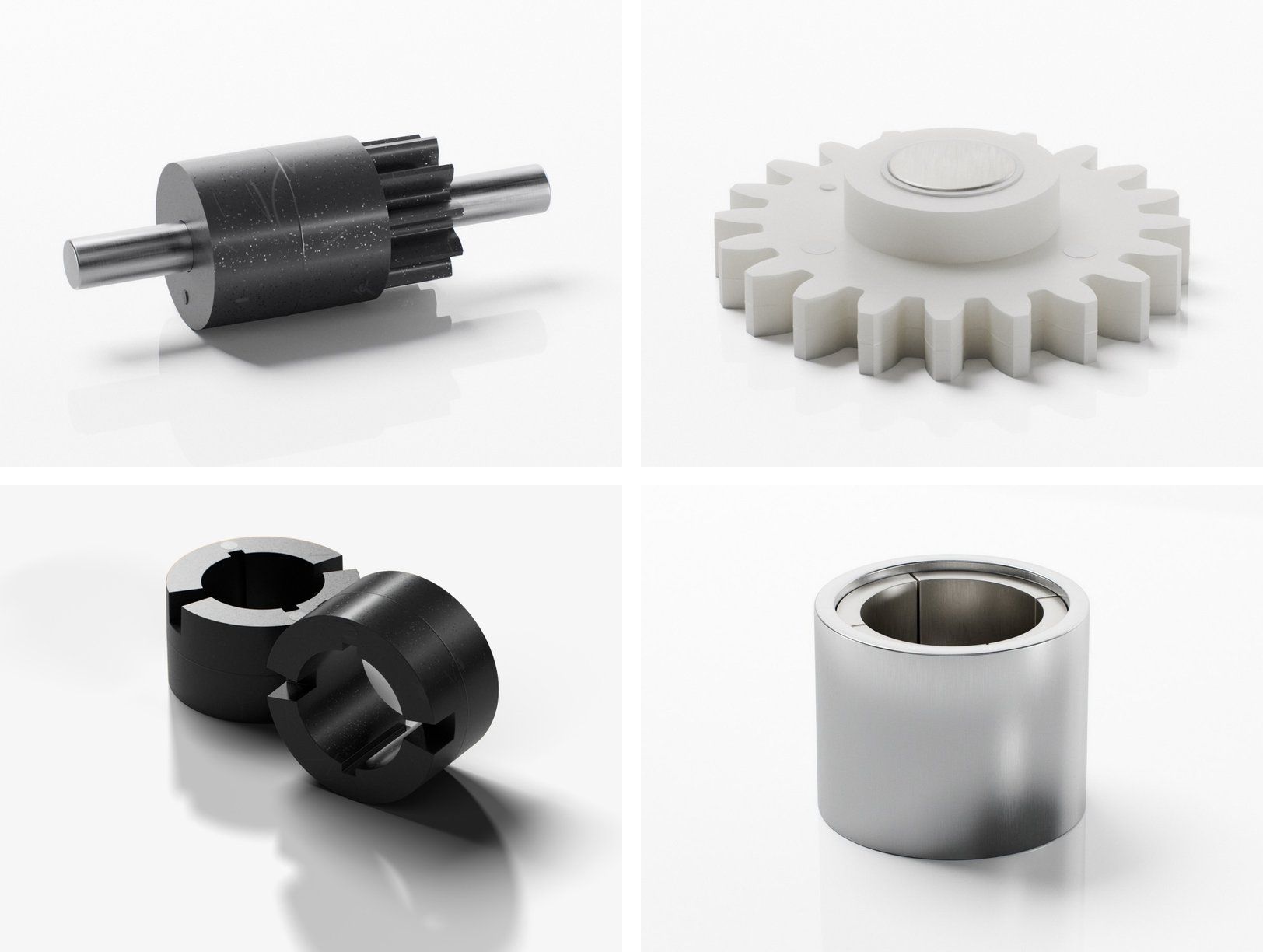
Typical designs: overmolded rotor with integrally molded pinion, insert-molded sensor magnet in a POM gear, multipole injection-molded rings with positioning notches, encapsulated micro-assembly about Ø 4 mm.
Comparison
Single magnet or assembly?
What changes when you no longer join the magnet yourself.
| Topic | Single magnet, assembled by you | Assembly from BOMATEC |
|---|---|---|
Suppliers | Magnet, coater, injection molder and adhesive are qualified and monitored individually | One supplier, one part number |
Process validation | You or your injection molder validate bonding or overmolding | We validate the joining process and supply the records |
Tolerances | Magnet tolerance, adhesive gap and mounting seat add up | Magnet position is measured on the assembly |
Incoming inspection | Several parts, several inspections | One inspection to a jointly agreed inspection plan |
Assembly | Fixtures for magnetized parts, protection against chipping and particles | Finished part, larger assemblies magnetized only after overmolding |
In case of deviations | Clarification between several suppliers | One contact person for the magnetic function |
Export control | Licence requirement depends on the magnet material | A general licence applies to assemblies from our plant in Malaysia |
To be honest
When we recommend a single magnet
Small quantities
An injection mold has to pay for itself over the series. For samples and small series, a bonded or joined design is often cheaper, or you assemble it yourself.
Joining is your core process
If you assemble the magnet with a lamination stack, winding or electronics anyway and this assembly is validated, a pre-assembly adds little.
The plastic is already fixed
If the plastic and the injection molder are already named in your approval documents, a change can trigger new tests. In that case we deliver the magnet coated and tested to your injection molder.
Materials
Plastic-bonded or overmolded
Plastic-bonded magnets are injection molded from a compound of magnet powder and plastic. This allows almost any shape, and teeth and notches are formed in the same step. Their magnetic values are lower than those of sintered magnets. Where they are not enough, we overmold a sintered magnet.
| Material | Use |
|---|---|
NdFeB in PA | High values for injection molding, for rotors and sensor rings |
Ferrite in PA | No rare earths, for lower field strengths |
NdFeB in PPS | When temperature or media are too much for PA |
POM | Non-magnetic, carrier for insert-molded magnets |
Other compounds on request.
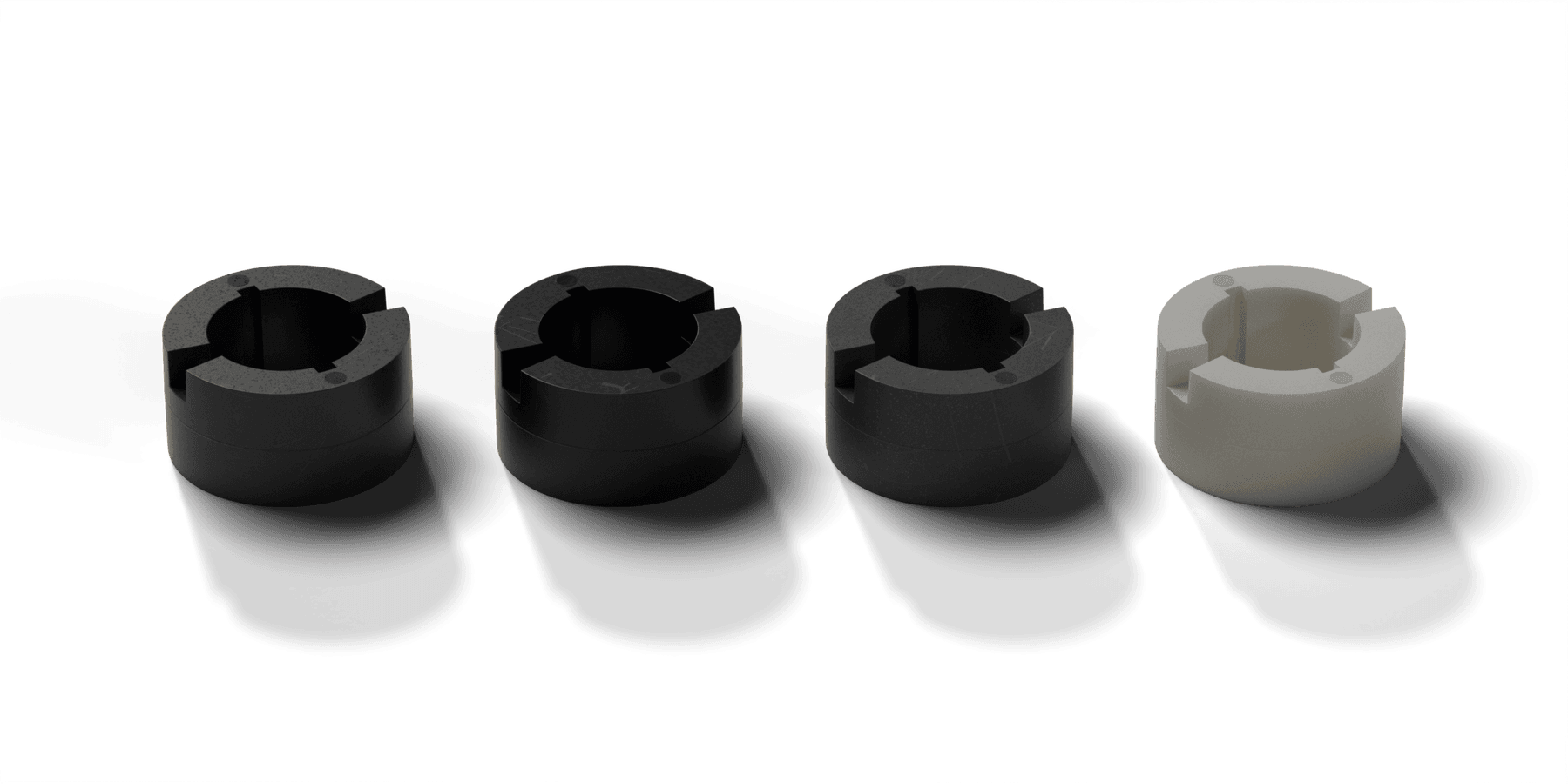
The same ring in four materials: NdFeB in PA, ferrite in PA, NdFeB in PPS, POM. Other compounds on request.
Process
From design to series production

1 · Design together
We define magnet, plastic and joining method together with your engineering team, using FEM if needed. We also check how much the process heat weakens the magnet.

2 · Samples
First parts for your tests. If a series mold does not pay off yet, we discuss a build without a mold.
3 · Validate
IQ/OQ/PQ for the joining process, an inspection plan for the assembly and a first article inspection report.
4 · Series production
Production and inspection according to plan. On request with consignment stock and safety stock in Switzerland.

Case study
The magnet in the impeller of a blood pump
How we shrank the coupling magnet of an intravascular blood pump, overmolded it into the impeller and secured the supply without an export licence.
FAQ
Frequently asked questions about magnet assemblies
From what quantity does an overmolded magnet pay off?
That depends mainly on the mold costs, which have to pay for themselves over the series. For small quantities, bonding or joining without a mold is often cheaper. We calculate both options for your quantities.
Is the magnet magnetized before or after overmolding?
For larger assemblies, usually afterwards. Then the process heat does not weaken the magnet, and the poles can be aligned to features of the part. For micro-assemblies this is not yet possible today. There the magnet is magnetized beforehand, and we account for the loss from the process heat in the design.
Who validates the joining process?
We validate our manufacturing processes to IQ/OQ/PQ and provide you with the records for your documentation. Responsibility for the medical device and its approval remains with you.
Is an overmolded magnet sealed well enough for contact with body fluids?
Not always. Plastics absorb moisture and are not hermetically sealed. For implants or prolonged contact with fluids, we check whether the magnet also needs to be coated or encapsulated in metal.
Which plastics do you use?
For plastic-bonded magnets mainly PA and PPS, and as a carrier for insert-molded magnets POM, for example. If your plastic is already named in the approval documents, tell us early and we will plan with it.
Does a magnet assembly need an export licence?
That depends on the magnet material and the country of origin. NdFeB without dysprosium and terbium is currently licence-free from China. Since April 2025, SmCo and NdFeB containing dysprosium or terbium need an export licence from China. The authority has up to 45 working days to decide, it often takes longer, and the rules change with politics. A general licence applies to assemblies from our plant in Malaysia, which shortens the procedure considerably.
What we need for a quotation
For an assembly, we mainly need the mating parts, i.e. shaft, housing or plastic part with their materials, and the quantities. They decide whether overmolding, insert molding or bonding fits and whether a mold pays off.
Talk to an expert
Your contact for medical technology
Talk to us about your project. We are happy to advise you personally.

Patrick Muschak
Sales Engineer Medical & Life Sciences

Philippe Scheuber
Head of Sales